The Best Pool Heating Systems for Australian Pools
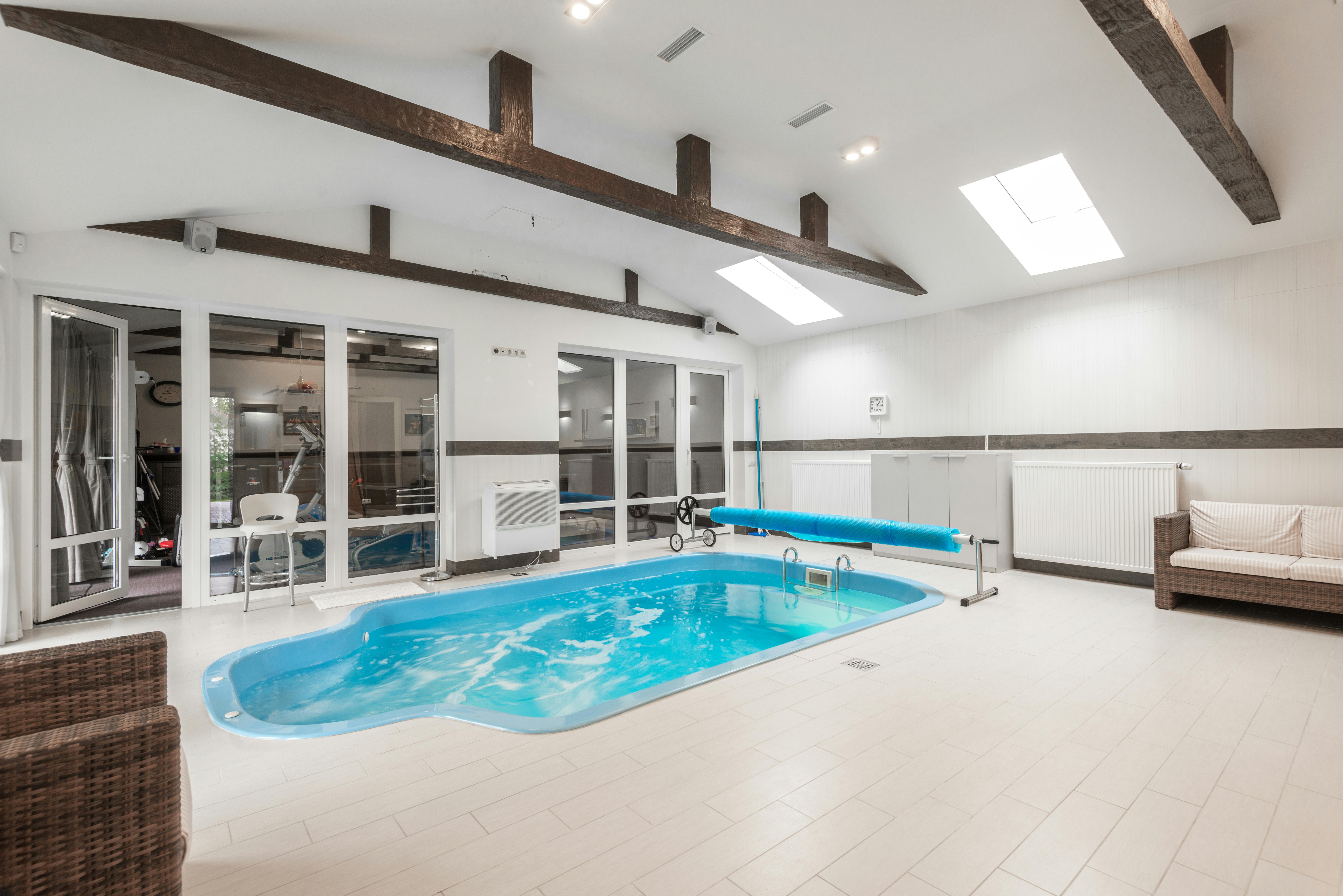
For most Australian households, a backyard pool sits cold and untouched for five to seven months of the year. You are paying for chemicals, equipment upkeep, and maintenance every single month - for a pool you barely use between April and October.
The problem is not the Australian climate. Pool owners across Perth, Sydney, Melbourne, and Brisbane swim comfortably well into autumn and through spring. The difference is a well-designed pool heating strategy. Without one, you are not just missing out on swim time. You are losing money to an entirely avoidable problem: heat loss.
Every pool that lacks proper heating and insulation loses heat continuously through evaporation, overnight temperature drops, and wind exposure. The result is a pool that never quite reaches a comfortable temperature, a heating system working overtime to compensate, and energy bills that reflect the inefficiency.
The right pool heating system changes this entirely. Whether you are drawn to solar heating, an electric heat pump, a gas heater, or the often-underestimated power of a quality pool cover, this guide covers every option available to Australian pool owners - with real costs, honest trade-offs, and a clear framework for making the right choice.
Here's Everything You Need to Know in Under a Minute
- There are four main pool heating options for Australian pool owners: solar heating, electric heat pumps, gas heaters, and pool covers
- Pool covers are the most cost-effective first step, reducing heating costs by up to 70% by stopping evaporation-driven heat loss at the source
- Solar heating is the cheapest to run long-term, with running costs under $1 per day
- Electric heat pumps are the most reliable year-round option and operate regardless of weather conditions
- Gas heaters heat the fastest but carry the highest ongoing running costs
- For most Australian pool owners, the most effective strategy is a quality pool cover combined with a solar or heat pump system
Why Every Australian Pool Needs a Heating System
Australia's climate feels generous until you check your pool thermometer. Even in Perth, where average summer temperatures regularly exceed 35°C, pool water drops to 16–18°C through the cooler months. In Melbourne, pool temperatures can sit at 12–14°C through winter, and even at the height of summer rarely exceed 22°C without active heating.
There is also a perception problem worth addressing. The surface of a pool - where you dip your toe to test the temperature - is always the warmest point. Water three to four times further down can be up to 3°C cooler. What feels acceptable at the surface is often uncomfortable the moment you submerge.
For true relaxation and comfort, pool temperature matters. Public spas are heated to 36°C because that is the temperature at which most people can genuinely relax rather than simply endure. For lap swimming, 25–26°C is the recognised standard. Without a pool heating system, most Australian backyard pools sit well below both marks for the majority of the year.
What Is the Ideal Pool Temperature for Swimming?
The ideal pool temperature depends on how you use your pool:
- Lap swimming and exercise: 26–28°C
- Recreational swimming for adults: 28–30°C
- Young children, elderly, or injury rehabilitation: 30–32°C
- Spa and hydrotherapy: 34–38°C
Without active heating, most Australian backyard pools only reach these temperatures during a narrow window of peak summer months - and never consistently at depth.
The Four Main Pool Heating Systems in Australia
Australian pool owners have four established options for extending their swimming season and maintaining comfortable water temperatures. Each has a different operating principle, cost profile, and ideal use case.
| System |
How It Works |
Best For |
Relative Cost to Run |
| Solar heating |
Circulates water through roof-mounted collector panels |
Sunny climates, seasonal heating |
Very low |
| Electric heat pump |
Extracts heat from ambient air |
Year-round use in all climates |
Low to moderate |
| Gas heater |
Burns gas to heat water rapidly |
Fast on-demand heating, spas |
High |
| Pool cover |
Prevents evaporation and retains existing heat |
Any pool as a cost-saving base layer |
Near zero |
Solar Pool Heating for Australian Pools
Solar pool heating is the most cost-effective active heating system available to Australian pool owners. A solar pump circulates pool water through a network of collector tubes or panels mounted on the roof or an adjacent structure. The sun heats the water as it passes through, and it returns to the pool at a higher temperature. The process continues on a cycle until your target temperature is reached.
Installation costs typically range from $3,000 to $8,500 for an average Australian backyard pool, depending on pool size, roof orientation, and collector type. Once installed, running costs are under $1 per day - one of the lowest operating costs of any pool heating system available.
According to Canstar's analysis of solar pool heating costs in Australia, the average system pays for itself within two years through reduced energy costs. A typical solar system carries a warranty of around 12 years and a working lifespan of approximately 15 years - the longest of any pool heating option.
Pros:
- Lowest long-term running cost of any active system
- Environmentally friendly, relying on renewable solar energy
- Long lifespan with minimal maintenance requirements
- Can add up to four months to your swimming season
Cons:
- Effectiveness depends on available sunlight and roof orientation
- May need a backup system during prolonged overcast periods or in cooler climates
- Heating is gradual rather than instant
How Effective Is Solar Pool Heating in Australia?
A correctly sized solar pool heating system can raise water temperature by 2–10°C, depending on location and season. On a warm, sunny day, the system can produce up to four times the heat output of an electric heat pump at zero additional energy cost.
The system works best in regions with consistent sunshine exposure: Queensland, Western Australia, South Australia, and New South Wales. In temperate and cooler climates, solar heating remains effective during extended shoulder seasons, but pool owners in Melbourne, Hobart, and Canberra typically pair solar with a secondary system for reliable winter use.
Does Solar Pool Heating Work on Cloudy Days?
Solar heating is less effective on cloudy days, but it does not stop working entirely. Diffuse solar radiation still reaches collector panels on overcast days, providing some degree of heating output. Pool owners in variable or cool climates who rely on solar heating often pair it with a quality thermal pool cover to retain whatever heat the system generates and reduce overnight losses.
Pool Heat Pumps for Year-Round Reliability
Electric pool heat pumps work on the same principle as a reverse-cycle air conditioner. The system draws heat from the surrounding air - even in relatively cool conditions - and transfers it into the pool water via a heat exchanger. Because it is moving heat rather than generating it, a heat pump produces far more thermal energy per unit of electricity than a traditional electric heater.
Installation costs range from $3,600 to $6,900. Annual running costs are approximately $250 to $750, depending on pool size, climate zone, and frequency of use. Modern inverter heat pumps reduce energy consumption by up to 80% compared to standard models by modulating their output to maintain temperature continuously, rather than cycling between full power and off.
Heat pumps operate independently of weather and daylight hours, making them the most reliable year-round pool heating system available in Australia. They are particularly well-suited to cooler climates where solar heating alone would not maintain comfortable temperatures through winter.
Pros:
- Reliable year-round heating regardless of weather or season
- More energy-efficient than gas and significantly cheaper to operate long-term
- Inverter models deliver excellent running cost performance over a 10–20 year lifespan
- Works in all Australian climate zones
Cons:
- Higher installation cost than gas heaters
- Slower to heat a pool compared to gas
- Performance in very cold climates requires a high-performance inverter model
Are Pool Heat Pumps Worth the Investment?
For pool owners who want to swim year-round, or who live in temperate or cool climates, a pool heat pump is one of the most practical long-term investments available. The running cost advantage over gas becomes significant within the first year of operation, and inverter models compound those savings across a 10–20 year lifespan.
Paired with a quality pool cover - which dramatically reduces the heat load the pump needs to replace - a heat pump system can maintain comfortable swimming temperatures through even the cooler Australian months at a fraction of the cost of gas heating.
What Is the Difference Between an Inverter and a Standard Heat Pump?
A standard heat pump operates at a fixed speed: fully on or fully off. Once the pool reaches the target temperature, it shuts down. When temperature drops, it restarts at full power.
An inverter heat pump modulates its compressor speed, running at reduced capacity to maintain temperature rather than constantly cycling between full power and standby. This approach reduces energy consumption by up to 80% and extends the lifespan of the unit by reducing wear from frequent full-power starts. For most Australian pool owners, the additional upfront cost of an inverter model is recovered within a few years of normal operation.
Gas Pool Heaters for Fast On-Demand Heating
Gas pool heaters heat water faster than any other system available. A series of copper tubes carries pool water through a combustion chamber where natural gas or LPG ignites to raise the temperature rapidly. A spa can reach target temperature in under an hour; a full-size pool within a few hours, depending on system capacity and starting temperature.
Installation costs range from $1,500 to $6,000. Running costs, however, are the highest of any pool heating option at $500 to $1,500 per year in natural gas, with LPG typically sitting higher still. Gas heater lifespan averages 5 to 10 years - the shortest of all available systems.
Gas heating is most commonly deployed for spas and heated pool-spa combinations where rapid heat-up times are essential - particularly for hydrotherapy, where water needs to reach 34–38°C on demand. AstralPool's pool heating guide confirms gas as the preferred choice for spas in southern Australian cities where natural gas infrastructure is readily available.
Pros:
- Fastest heating of all available systems
- Effective in any climate, regardless of temperature or weather
- Ideal for spas and on-demand use where immediate heat-up is needed
Cons:
- Highest ongoing running costs of any pool heating option
- Shortest lifespan at 5–10 years
- Copper heat exchangers are susceptible to damage from chemical imbalances
- High carbon output compared to solar or heat pump alternatives
Is Gas Pool Heating Still Worth It?
For a full-size backyard swimming pool used year-round, the running cost disadvantage makes gas a difficult choice to justify on total cost of ownership. At $500–$1,500 per year in gas costs, a heat pump will typically outperform on total cost within 2–3 years of operation.
Where gas remains the strongest choice: purpose-built spas, heated indoor pools requiring rapid temperature changes, and facilities where immediate heat-up time is a non-negotiable operational requirement.
Pool Covers as a Pool Heating System
The most consistently underestimated element of pool heating is not any active system. It is the pool cover.
Evaporation is the primary driver of pool heat loss, accounting for approximately 70% of total energy loss from an uncovered pool. Every litre of water that evaporates carries significant heat energy away with it. Overnight, without insulation, a heated pool can lose a meaningful portion of the temperature it accumulated during the day.
The US Department of Energy identifies covering your pool when not in use as "the single most effective means of reducing pool heating costs", with savings of 50–70% achievable. Beyond heat retention, pool covers reduce water evaporation by up to 98% and cut chemical consumption by 35–60%.
This is not a minor accessory consideration. For pool owners with an active heating system already installed, a quality pool cover can be the single most impactful addition to their setup. For pool owners without an active heater, a solar or thermal pool cover can extend the swimming season and maintain temperature at near-zero running cost.
Solar Pool Covers vs. Thermal Pool Blankets
Two primary pool cover types serve different functions and suit different seasonal conditions.
Solar Pool Covers
Solar pool covers feature the characteristic bubble surface that captures and transfers solar energy directly into the pool water, while simultaneously insulating the surface to reduce overnight losses. A well-chosen solar pool cover can raise pool water temperature by 8–12°C on a warm, sunny day and is well suited to:
- Spring and summer use in regions with consistent sunshine
- Pool owners seeking passive heating without an active system
- Pairing with solar heating systems to maximise output and retention
Thermal Pool Blankets
Thermal pool covers are engineered specifically for heat retention rather than solar gain. Made from thick polyethylene foam, they act as a high-performance insulating layer capable of retaining approximately 75% of pool water temperature overnight. They are best suited to:
- Winter use in temperate and cool climates
- Pairing with active heating systems to protect the energy investment
- Pool owners where overnight insulation performance matters more than daytime solar gain
Triple-Cell Covers
Triple-cell pool covers combine multiple bubble layers for increased insulation value beyond standard solar covers, while maintaining some capacity for solar heat absorption. They represent a strong all-season option for pool owners who want both insulation performance and solar contribution throughout the year.
How Much Money Can a Pool Cover Save on Heating Costs?
The savings from a quality pool cover compound across every element of pool ownership. Used consistently, a correctly fitted cover can reduce:
- Heating energy costs by 50–70%
- Water evaporation by up to 98%
- Chemical consumption by 35–60%
- The operating load placed on any active heating system
For a detailed breakdown of pool cover pricing in Australia, Elite Pool Covers' comprehensive pool cover cost guide covers the full range of options across cover types, sizes, and specifications. For pool owners who want to understand the full case for covering their pool, Why Do I Need a Pool Cover? breaks it down in practical terms.
Pool Heating Costs Compared
| System |
Installation Cost |
Annual Running Cost |
Lifespan |
Best For |
| Solar heating |
$3,000–$8,500 |
Under $1/day |
~15 years |
Sunny climates, extended season |
| Electric heat pump |
$3,600–$6,900 |
$250–$750/year |
10–20 years |
Year-round use, all climates |
| Gas heater |
$1,500–$6,000 |
$500–$1,500/year |
5–10 years |
Spas, fast on-demand heating |
| Pool cover |
$150–$2,000+ |
Near $0 |
5–12 years |
Cost-effective base for all systems |
Which Pool Heating System Suits Your Climate?
Australia's geographic diversity means the best pool heating strategy in Darwin looks very different from the best approach in Hobart. Here is a climate zone guide for Australian pool owners.
Tropical Regions (Darwin, Cairns, Townsville)
Water temperatures stay relatively comfortable year-round in tropical Australia, but shoulder-season cooling creates a gap that a quality pool cover addresses at near-zero cost. A heat pump provides reliable supplemental heating for the cooler months without the complexity of a full active heating installation.
Subtropical Regions (Brisbane, Gold Coast, Sunshine Coast)
Solar pool heating is a strong primary system in subtropical Queensland. Consistent sunshine makes the economics compelling, and a quality pool cover working in combination with solar heating extends the benefits well into the cooler months. Most Brisbane and Gold Coast pool owners using this combination comfortably extend their swimming season to nine or ten months per year.
Temperate Regions (Sydney, Perth, Adelaide)
A solar heating and pool cover combination works well for nine to ten months of the year in temperate climates. Pool owners seeking true year-round reliability typically add a heat pump or adopt a solar and heat pump hybrid approach. Thermal pool blankets become an important investment in autumn and winter, retaining heat that would otherwise be lost overnight.
Cool Regions (Melbourne, Canberra, Hobart)
A heat pump is the most practical primary heating system for cooler Australian climates. Solar alone is unlikely to maintain comfortable temperatures through winter in these regions, and gas carries prohibitive running costs across a full year. A high-quality thermal pool cover is non-negotiable in cool climates - it protects the output of the heat pump and dramatically reduces the heating load required to maintain target temperature.
Do I Need a Pool Heater If I Already Have a Pool Cover?
It depends on your climate zone and your temperature expectations. In tropical and subtropical regions, a high-performance pool cover alone can maintain comfortable swimming temperatures for most of the year. In temperate and cool climates, a pool cover significantly reduces heating costs but most pool owners who want to swim through autumn and winter will benefit from pairing it with an active heating system.
Why Every Pool Heating Strategy Should Start With a Pool Cover
Every active pool heating system is working against a continuous source of heat loss without a pool cover in place. The reason is evaporation. An uncovered pool loses heat constantly through evaporation, regardless of how capable the heating system is. The heater works harder, runs longer, and costs more - replacing heat that a cover would have prevented from leaving in the first place.
A pool cover does not just reduce costs. It amplifies the effectiveness of every other heating system it is paired with. A heat pump combined with a quality cover maintains target temperature at a fraction of the energy cost of the same heat pump operating on an uncovered pool. Solar heating generates more net temperature gain when a cover retains what the system has already produced.
The proven sequence is straightforward: invest in a quality pool cover first, then choose your active heating system to address the remaining gap. This approach consistently delivers lower running costs, more consistent temperatures, and a longer effective lifespan from every heating component in your setup.
For guidance on selecting the right cover and roller for your pool, Elite Pool Covers' ultimate guide to buying and fitting a pool cover and roller covers everything from cover types to measurement and installation.
Elite Pool Covers: Australia's Pioneer Pool Cover Specialists Since 1989
Established in Perth in 1989, Elite Pool Covers has led Australian pool cover innovation for more than 35 years - building the country's first automatic pool cover, first all-aluminium commercial roller, and first in-ground hideaway roller system, and earning the first Smart Approved Watermark for water conservation. Its Salt Safe® and Chlor Safe™ blankets are engineered for Australia's demanding pool chemistry.
Elite was chosen ahead of international competitors to cover the pools for two World Swimming Championships at Challenge Stadium in Perth, building Australia's first commercially viable motorised winding system to do so. The same standard underpins installations at HBF Stadium, Fiona Stanley Hospital, and Perth Children's Hospital, with the range now exported to New Zealand, South Africa, Spain, France, and the UAE.
Elite's track record speaks for itself, with a 4.2-star rating across 51 customer reviews and covers built to outlast the seasons:
"Purchased a pool cover in July 2004. Surprisingly, we only have a few holes. The roller has lasted the distance."
— J O'Hehir, NSW (reviewed 2024, cover still in service after 20 years)
"Still going strong after ten years. Exceptional after-sales service."
— Sue Diamond, WA
The Elite range covers every pool type and application: solar pool covers, thermal pool covers, automated pool covers, walk-on hard covers, spa covers, and pool cover rollers - all engineered for Australian conditions.
How to Choose the Right Pool Heating System for Your Pool
The right pool heating system sits at the intersection of four variables: how often you swim, your climate zone, your budget across installation and ongoing running costs, and what your pool is primarily used for.
Step 1: Establish your swimming frequency
If you swim year-round or close to it, you need an active heating system - either a heat pump, solar heating, or a combination of both. If you swim seasonally, a quality pool cover may be sufficient on its own in warmer climates, or paired with solar heating in temperate regions.
Step 2: Assess your climate zone
Tropical and subtropical climates support solar heating as a primary system. Temperate and cool climates need a heat pump as the primary active system, with a thermal pool cover as a non-negotiable companion for winter use.
Step 3: Calculate total cost of ownership, not just installation cost
Define both your installation budget and the ongoing running cost you are prepared to carry. Gas has the lowest installation entry point but the highest running cost over a 10-year horizon. Heat pumps carry a moderate installation cost with low long-term running costs. Solar has the highest installation range but the lowest total cost of ownership over 15 years.
Step 4: Start with a pool cover
Regardless of your active system choice, a pool cover should be the first investment you make - not an afterthought. It reduces the load on every active system, extends the operational lifespan of your heating equipment, and delivers immediate, measurable cost savings from day one.
Should I Combine a Pool Cover With My Heating System?
Yes, without exception. A pool cover does not replace an active heating system for year-round use, but it dramatically improves the performance and cost-efficiency of whatever system you are running. Pool owners who use a cover consistently alongside an active heating system achieve meaningfully lower running costs than those operating the same system on an uncovered pool.
What Is the Best Pool Heating System for a Family Pool?
For most Australian families using a residential pool primarily for recreation and lap swimming, the combination of a quality pool cover (solar or thermal, matched to your climate) and an inverter heat pump delivers the best balance of year-round reliability, running cost efficiency, and ease of use. Solar heating adds further value as a primary or supplemental system in sunnier regions.
How Long Does It Take to Heat a Pool?
Heating time varies significantly by system type and starting conditions:
- Gas heater: 4–24 hours depending on pool size
- Electric heat pump: Several hours to a few days to reach target temperature from cold
- Solar heating: 1–11 days depending on location, season, and pool size
- Pool cover alone: Gradual increase of up to 8–12°C over several days of consistent use in suitable conditions
Frequently Asked Questions About Pool Heating Systems
What Is the Cheapest Way to Heat a Pool in Australia?
The cheapest long-term approach is a quality pool cover paired with a solar pool heating system. The cover handles heat retention - reducing the load the solar system needs to carry - while solar heating provides near-zero running cost energy input. The combination typically pays for itself within two years and delivers the lowest total cost of ownership across a 10–15 year horizon.
Can a Pool Cover Replace a Pool Heater?
In warmer Australian climates - tropical and subtropical regions - a high-quality solar or thermal pool cover can maintain comfortable swimming temperatures for most of the year without an active heater. In temperate and cool climates, a pool cover significantly reduces heating costs but works best paired with an active system for reliable year-round use.
The savings compound quickly. A correctly fitted cover reduces heating energy costs by 50–70%, cuts water evaporation by up to 98%, and lowers chemical consumption by 35–60% - with most covers paying for themselves within one to two years. For a full breakdown of what pool covers deliver in practical and financial terms, Why Do I Need a Pool Cover? covers the complete cost-benefit analysis for Australian pool owners.
What Is the Most Energy-Efficient Pool Heating System?
A solar pool heating system carries the highest energy efficiency in terms of running cost - it converts free solar radiation into heat with minimal electricity input. For year-round performance across all weather conditions, a full inverter heat pump paired with a quality pool cover is the most energy-efficient system for consistent use, consuming up to 80% less energy than a standard heat pump.
Do Pool Covers Work in Winter?
Yes - and thermal pool covers perform at their best in winter conditions. When temperatures drop, the priority shifts from solar gain to heat retention, and a thermal pool blanket is specifically engineered to insulate the pool surface and prevent overnight heat loss from any active heating system.
To get the most from your cover through the cooler months, a few key practices make a significant difference: keep chlorine levels below 2.5ppm to avoid material degradation, store the rolled cover under a protective over-cover to shield it from UV and weather, and remove the cover during any extreme temperature days above 38°C to prevent heat buildup between the cover and the water. Regular rinsing to clear chemical residue will extend cover lifespan considerably. For a full seasonal care guide, caring for your pool cover covers everything from chemical balance to storage best practices.
How Often Do Pool Heating Systems Need Servicing?
- Solar heating: Annual inspection is recommended; minimal maintenance is required beyond checking connections and collector condition
- Heat pump: Annual service by a licensed technician is recommended to maintain peak efficiency
- Gas heater: Annual service is essential and must be carried out by a licensed technician; copper heat exchangers require attention if water chemistry drifts out of balance
- Pool cover: Regular rinsing to remove chemical residue, and proper use of a protective overcover when the blanket is stored on the roller, extends cover lifespan significantly
Start Swimming More and Paying Less
Every Australian pool owner deserves to use their pool for more than a few months a year. The technology to make that possible - and the insight to choose the most cost-effective path to get there - is available and proven.
The key takeaways from this guide:
- Evaporation drives the majority of pool heat loss - address it first with a quality pool cover
- A pool cover can reduce heating costs by 50–70%, regardless of which active heating system you are running
- Solar heating offers the lowest long-term running cost for sunny climates
- Inverter heat pumps deliver the most reliable year-round performance for all Australian climate zones
- Gas heaters are best reserved for spas and fast on-demand applications
- The most effective approach for most Australian pool owners: quality pool cover first, active heating system second
Elite Pool Covers has been engineering pool cover systems that protect and extend the performance of Australia's pools since 1989. From residential solar pool covers and thermal pool covers to commercial motorised systems trusted at world-class aquatic facilities, the range is built to perform in Australian conditions and built to last.
Get An Elite Pool Covers Quote Today
Need specific pricing for your pool? Elite Pool Covers are Australian leaders in swimming pool covers and roller technology. Give us a call on (08) 9240 2262 or request a personalised quote, to receive accurate pool cover pricing tailored to your unique requirements.