How to Protect Your Pool Cover From Damage and Extend Its Lifespan
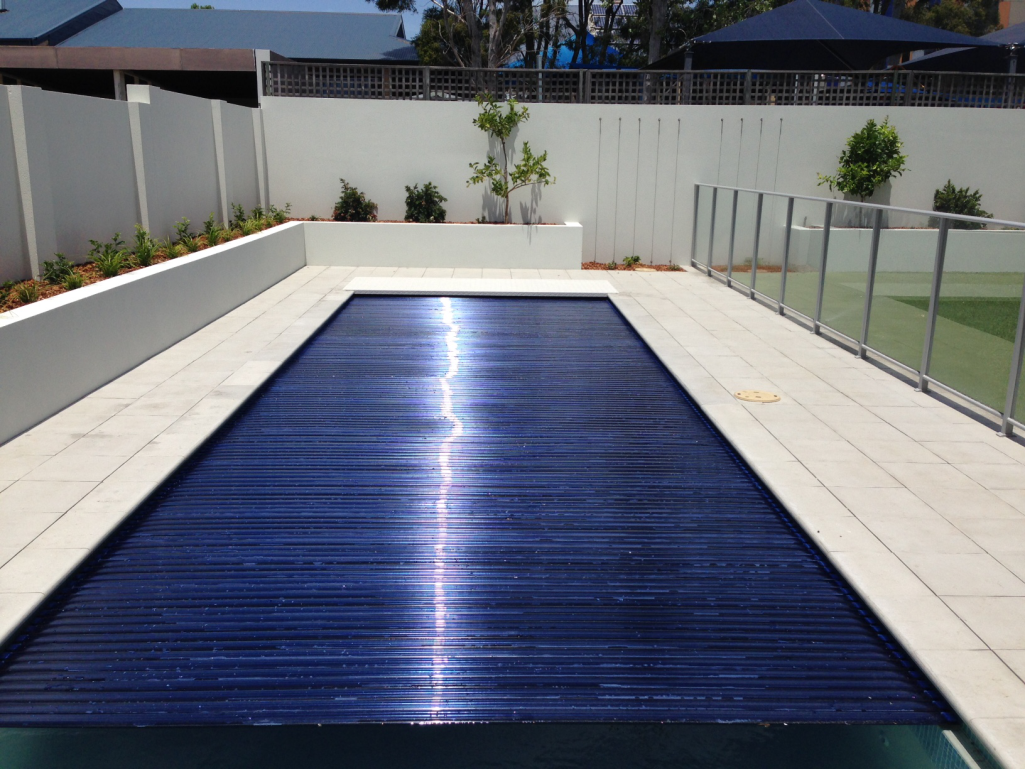
Is your pool cover deteriorating faster than expected, showing signs of shrinkage, tears, or chemical damage that could have been prevented? Are you watching your investment literally fall apart due to UV exposure, improper storage, or chemical imbalance when you thought you were doing everything right? Australian pool owners lose thousands of dollars annually replacing pool covers that should have lasted years longer with proper protection techniques.
The financial impact extends far beyond replacement costs. A damaged pool cover loses its effectiveness at heat retention, water conservation, and debris protection, forcing you to spend more on heating, chemicals, and cleaning. Meanwhile, warranty claims get rejected due to "owner misuse" when simple protection measures could have prevented the damage entirely. The frustration of investing in quality equipment only to watch it deteriorate prematurely affects every aspect of your pool ownership experience.
The solution lies in understanding professional pool cover protection strategies that safeguard your investment against Australia's harsh conditions. This comprehensive guide reveals the essential protection techniques, environmental shields, and maintenance practices that keep solar pool blankets, pool cover rollers, and thermal pool covers performing optimally for their entire design lifespan.
Here's Everything You Need to Know in Under a Minute
- Never store rolled covers in direct sunlight to prevent heat damage and shrinkage
- Maintain chlorine levels below 2.5ppm to avoid chemical degradation
- Use reflective over-covers on rollers for UV and heat protection
- Remove covers during shock treatments and extreme weather events
- Clean thoroughly before long-term storage to remove chemical residues
- Inspect monthly for early damage detection and prompt repairs
- Avoid folding along same lines repeatedly to prevent permanent creases
Understanding Pool Cover Damage Causes
Pool cover deterioration results from specific environmental and chemical factors that Australian conditions make particularly aggressive, but understanding these causes enables effective prevention strategies.
Heat-Related Damage
Australian summers create extreme conditions that rapidly deteriorate pool covers:
- Direct Sunlight Exposure — UV radiation breaks down polymer structures in cover materials
- Heat Accumulation — rolled covers in sun create internal temperatures exceeding 70°C
- Thermal Cycling — daily temperature variations cause expansion and contraction stress
- Bubble Deformation — heat causes air expansion in solar blanket bubbles, leading to permanent stretching
Chemical Degradation
Pool chemicals, while necessary for sanitation, can destroy cover materials:
- Chlorine Oxidation — levels above 2.5ppm cause rapid material breakdown
- pH Extremes — acidic or alkaline conditions degrade fabric and welded seams
- Chemical Concentration — trapped chemicals under covers create concentrated exposure
- Shock Treatment Damage — high chlorine doses during treatment phases accelerate deterioration
Physical Stress Factors
Mechanical stresses from handling and environmental forces:
- Improper Rolling — uneven tension creates stress points leading to tears
- Wind Damage — unsecured covers suffer flapping stress and material fatigue
- Weight Loading — debris accumulation creates sagging and material stress
- Abrasion Damage — dragging across rough surfaces causes micro-tears that propagate
UV Radiation Impact
Australia's intense UV levels pose unique challenges:
- Material Photodegradation — UV breaks chemical bonds in polymer chains
- Colour Fading — indicates underlying structural damage to materials
- Surface Cracking — advanced UV damage creates visible surface deterioration
Temperature Extremes
Australian climate variations stress cover materials:
- Thermal Shock — rapid temperature changes cause material stress
- Heat Buildup — trapped air creates damaging internal temperatures
- Cold Temperatures — winter temperatures make materials brittle and crack-prone
- Expansion/Contraction — cyclical stress weakens material structure over time
Moisture-Related Damage
Humidity and water exposure create specific problems:
- Mould and Mildew — stored damp covers develop biological degradation
- Chemical Concentration — trapped moisture concentrates pool chemicals
- Freeze Damage — water trapped in materials expands when frozen
- Condensation Issues — temperature differentials create moisture buildup
Understanding Damage Progression
Cover damage typically follows predictable patterns:
- Initial Exposure — chemical or UV exposure begins material degradation
- Microscopic Changes — molecular structure weakens before visible damage appears
- Surface Manifestation — discolouration, texture changes, or minor cracking develops
- Structural Failure — advanced damage leads to tears, shrinkage, or complete failure
- System Compromise — damaged covers lose effectiveness and require replacement
Cost Impact Analysis
| Damage Factor |
Impact |
| Replacement costs |
Depending on type and size |
| Lost effectiveness |
Damaged covers lose 40–60% of their protective benefits |
| Increased operating costs |
Poor covers increase heating, chemical, and cleaning expenses |
| Safety risks |
Compromised covers may fail to provide adequate safety protection |
This understanding provides the foundation for implementing effective protection strategies that prevent damage before it occurs.
Chemical Protection Strategies for Cover Longevity
Maintaining proper water chemistry represents the most critical factor in preventing pool cover damage while ensuring safe swimming conditions.
Safe Chlorine Ranges
Proper chlorine levels protect both swimmers and covers:
- Operating Range — maintain 1.0–2.5ppm when covers are in use
- Maximum Safe Level — never exceed 2.5ppm with covers installed
- Testing Frequency — check chlorine levels once a week during active season
- Adjustment Protocol — gradually adjust levels to prevent chemical shock to covers
Shock Treatment Protocols
High chlorine treatments require special cover protection:
- Cover Removal — remove all covers before shock treatment applications
- Treatment Duration — keep covers off for 48–72 hours after shock treatments
- Level Verification — test chlorine levels before reinstalling covers
- Chemical Dispersal — ensure complete mixing and circulation before cover replacement
Chemical Concentration Prevention
Trapped chemicals under covers create damaging concentrations:
- Circulation Requirements — run pumps during cover installation to prevent stratification
- Gas Venting — allow chemical gases to escape before cover installation
- Timing Applications — add chemicals during cover-off periods when possible
- Dilution Practices — ensure thorough mixing before cover contact
Optimal pH Ranges
Maintain pH within safe parameters for cover materials:
| pH Level |
Status |
Effect on Cover |
| Below 7.0 |
Too acidic |
Material degradation and brittleness |
| 7.2–7.6 |
Optimal range |
Minimises both acidic and alkaline damage |
| Above 8.0 |
Too alkaline |
Scaling and discolouration |
Professional Testing Standards
Regular testing ensures optimal cover protection:
- Test Kit Quality — use professional-grade test kits for accurate readings
- Testing Frequency — daily testing during problem periods, weekly during normal operation
- Parameter Monitoring — test chlorine, pH, alkalinity, and calcium hardness regularly
- Record Keeping — maintain testing logs to identify trends and problems
Chemical Application Best Practices
- Pre-Application Testing — always test water before adding chemicals
- Gradual Adjustments — make small chemical changes over time rather than large corrections
- Distribution Methods — add chemicals to deep end while circulation system operates
- Contact Time — allow proper contact time before cover installation
Chemical Storage and Handling
- Storage Requirements — keep pool chemicals in cool, dry, ventilated areas
- Container Integrity — replace damaged or corroded chemical containers promptly
- Mixing Prohibition — never mix different chemicals together
- Safety Equipment — use proper protective equipment when handling chemicals
Advanced Chemical Protection
Enzyme treatments provide natural, chemical-free water treatment. Enzymes digest oils, cosmetics, and organic debris, reducing reliance on harsh chemicals that damage covers. They are completely safe for all cover materials and improve water clarity with reduced chemical exposure.
Mineral systems offer alternative sanitisation that reduces cover-damaging chemicals. Copper/silver systems provide sanitisation with reduced chlorine requirements and are gentler on cover materials than traditional chemical regimes. Reduced chemical exposure through mineral systems can extend cover lifespan significantly.
UV and Heat Protection Methods
Australia's intense UV radiation and extreme temperatures require specialised protection strategies to prevent cover deterioration and extend service life.
UV Radiation Effects
Australian UV levels cause specific types of cover damage:
- Polymer Chain Breakdown — UV photons break molecular bonds in cover materials
- Surface Degradation — creates micro-cracks and texture changes in cover surfaces
- Colour Degradation — fading indicates underlying structural damage to materials
- Embrittlement — materials lose flexibility and become prone to cracking and tearing
Heat Damage Processes
Extreme temperatures accelerate material deterioration:
- Thermal Expansion — heat causes materials to expand beyond design tolerances
- Chemical Acceleration — high temperatures speed chemical degradation processes
- Bubble Deformation — heat causes air expansion in solar blanket bubbles
- Material Softening — excessive heat makes covers prone to permanent deformation
Protect Your Pool Cover
Failure to protect your pool cover when it is not on the water results in the cover shrinking, curling or burning. When a pool cover is on the pool water the radiant heat transfers into the water adding heat to the pool. When a cover is not on the pool the same radiant heat has no where to go and effects the Polyethylene fabric.
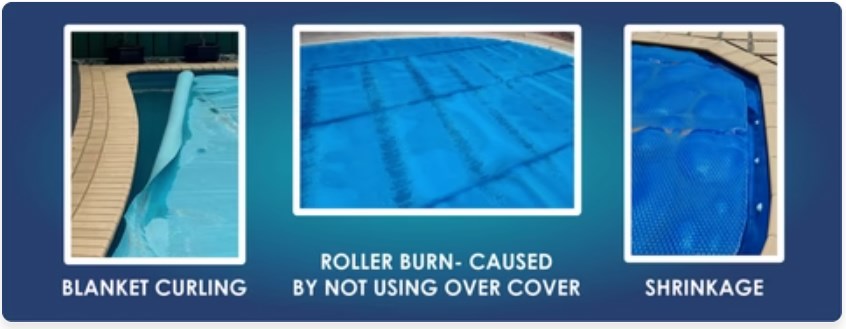
Overheating
One major contributor to pool cover shrinkage is overheating. This phenomenon occurs when the pool cover is off the pool, folded or rolled up, and exposed to partial or direct sunlight. Over time, heat accumulates within the layers of the folded or rolled cover, causing the plastic material to become more pliable. This increased malleability leads to the expansion of air within the bubbles, causing them to stretch into a convex profile rather than maintaining a flat shape. This stretching results in abnormal shrinkage, and it's important to note that such shrinkage is not covered under the warranty.
Gassing Up
"Gassing up" is another factor contributing to pool cover shrinkage. It involves the expansion of air within the bubbles, leading to increased pressure and causing tension within the cover material. This tension results in a slight reduction in cover size and appears to be connected to water temperature and an imbalance in water treatment. Moisture within the bubbles due to condensation may also play a role. To prevent permanent damage due to gassing up, prompt testing and adjustment of pool chemistry to recommended levels are essential.
Rolling and Folding
Rolling and folding the pool cover when it is not in use can lead to the formation of creases in the material, which affect the cover's fit. To counteract shrinkage and extend the lifespan of the pool cover, it's advisable to add 2% of the pool dimensions to the cover size during production. Additionally, using a high-quality reflective storage cover when the main cover is not in use can help protect it from environmental factors that contribute to shrinkage.
Shade Protection
To prevent overheating-induced curling or shrinkage, it's crucial to protect the pool cover from direct sunlight when not in use. Placing the cover under shade cloth or a patio is insufficient to shield it from the sun's heat. Complete shade protection is necessary to avoid damage due to overheating. Using a reflective storage cover can also help safeguard the cover's integrity and extend its lifespan.
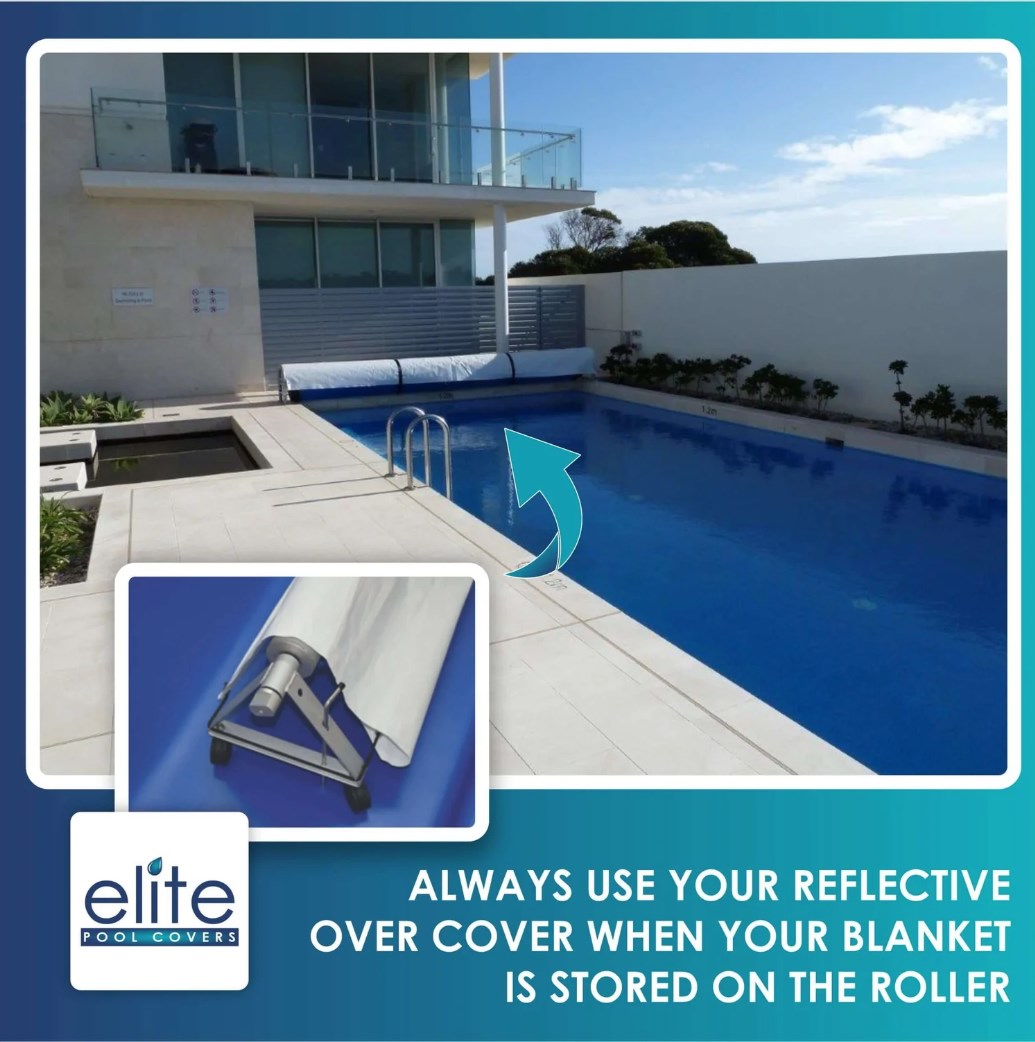
Our Suggestion
Always use your reflective over cover when the pool is not in use.
Professional UV Protection Systems
Reflective over-cover technology uses high-quality reflective fabrics to deflect 90–95% of UV radiation. Professionally fitted over-covers provide complete protection with proper ventilation design that prevents heat buildup. Commercial-grade materials withstand Australian conditions.
Shade structure integration provides comprehensive protection through shade sail systems strategically positioned to block direct UV exposure, pergola integration, retractable awnings, and pool house design that incorporates cover storage protection.
Heat Management Strategies
Professional temperature management prevents heat damage:
- Use infrared thermometers to monitor cover surface temperatures
- Remove covers when surface temperatures exceed 38°C
- Track ambient conditions that affect cover temperatures
- Schedule cover handling during cooler parts of the day
Daily Protection Protocols
Morning procedures should start with checking ambient and surface temperatures before handling, monitoring the UV index using weather services, verifying shade is properly positioned, and inspecting roller systems and over-covers for proper function.
Midday protection is critical as peak UV and temperature periods require maximum attention. Remove covers during peak heat if necessary and ensure all pool handlers understand protection protocols.
Evening procedures should include allowing covers to cool completely before final storage, installing protective over-covers for overnight protection, and securing covers to prevent wind damage during overnight periods.
Advanced Protection Technologies
Modern cover materials incorporate UV stabiliser additives, multi-layer construction, reflective coatings, and sacrificial outer layers designed to protect inner structural materials. Smart protection systems with temperature and UV sensors provide automated monitoring with mobile app integration for real-time protection status.
Proper Storage Techniques and Equipment
Professional storage methods protect pool covers from environmental damage while maintaining their structural integrity and extending operational lifespan.
Roller System Protection
Quality pool cover rollers require proper daily protection:
- Over-Cover Installation — always use reflective over-covers when covers are rolled
- UV Shielding — over-covers must completely block UV exposure to rolled covers
- Heat Reflection — white or reflective over-covers prevent heat buildup in rolled covers
- Secure Attachment — properly secure over-covers to prevent wind displacement
⚠️
Important
Partial shade is insufficient. Covers need 100% shade coverage. Ensure adequate ventilation around rolled covers to prevent dangerous heat accumulation and moisture buildup.
Pre-Storage Preparation
Thorough preparation ensures covers survive extended storage:
- Deep Cleaning — remove all debris, chemicals, and organic matter from covers
- Chemical Removal — rinse covers thoroughly to remove chlorine and chemical residues
- Complete Drying — ensure covers are 100% dry before storage to prevent mould
- Inspection Process — document cover condition before storage for comparison
Storage Environment Requirements
- Temperature Control — store in cool, stable temperature environments
- Humidity Control — maintain low humidity to prevent biological growth
- Pest Prevention — seal storage areas against insects and rodents
- Chemical Separation — store away from pool chemicals and cleaning supplies
Folding and Rolling Techniques
The accordion folding method prevents permanent creases by varying fold locations to distribute stress evenly. Place soft materials between folds to prevent adhesion, fold gradually without forcing materials, and store folded covers in flat, supported positions.
For covers that benefit from rolling, use large-diameter tubes to minimise stress on materials, wrap rolled covers in breathable protective materials, store rolls horizontally to prevent sagging and distortion, and use proper supports to prevent cover deformation.
Storage Location Options
| Storage Type |
Best For |
Key Requirements |
| Pool equipment room |
Year-round storage |
Controlled environment, dedicated space |
| Garage |
Off-season storage |
Weather protection, adequate ventilation |
| Basement |
Long-term storage |
Cool, stable environment with humidity control |
| Outdoor enclosed structure |
When indoor storage unavailable |
Fully weatherproof, elevated, lockable |
Ventilation Considerations
Proper airflow prevents moisture and heat buildup. Ensure rolled covers have adequate ventilation around them, prevent condensation buildup that leads to mould and mildew, and control humidity levels in all storage areas.
Seasonal Protection Protocols
Australia's diverse seasonal conditions require adapted protection strategies that address specific environmental challenges throughout the year.
Summer Protection Strategies (December–February)
Australian summers pose the greatest threat to pool covers:
- Track daily temperatures and UV index levels
- Remove covers when ambient temperatures exceed 38°C
- Allow covers to cool completely before storage
- Use reflective over-covers during all daylight hours
- Schedule cover handling during early morning or evening hours
- Test pool chemistry daily during extreme heat periods
Autumn Protection Protocols (March–May)
Autumn's variable conditions require flexible protection. Monitor changing weather patterns and temperature fluctuations, increase cover cleaning frequency during leaf fall, and schedule major maintenance during the moderate weather of this period. Ensure pool cover clips are secure during windy periods and arrange a detailed professional assessment before winter preparation.
Winter Protection Measures (June–August)
Winter pool covers require specialised protection. Ensure enhanced anchoring for winter wind conditions, proper slope and drainage to prevent water accumulation, and weekly inspection for winter damage. Handle covers gently in cold conditions as materials become more brittle, and carefully manage condensation buildup under covers throughout the season.
Spring Reactivation Protocols (September–November)
Spring startup requires comprehensive assessment. Conduct a detailed inspection for cold weather damage, lubricate and adjust roller mechanisms, and verify all automated systems function properly after winter storage. Carefully rebalance water chemistry during season startup and adjust protection systems for increasing UV levels.
Regional Seasonal Variations
| Region |
Key Challenges |
Primary Considerations |
| Tropical (QLD, NT) |
Monsoon, cyclones, year-round UV |
Wet season protocols, cyclone readiness, continuous humidity control |
| Temperate (Sydney, Melbourne, Adelaide) |
Variable seasons, storm risk |
Seasonal transitions, flexible protection, scheduled maintenance windows |
| Arid (Central & Western Australia) |
Extreme heat, dust storms, intense UV |
Enhanced UV protection, specialised dust cleaning, water conservation |
Storm and Weather Protection Measures
Severe weather events pose significant threats to pool covers, requiring comprehensive preparation and response protocols to prevent damage and ensure safety.
Pre-Storm Preparation
Determine when to remove covers based on conditions:
- Remove covers when sustained winds exceed 60km/h
- Remove all covers when hail is forecast
- Extended storms require different protocols than brief events
- Different cover types have varying storm tolerance levels
Emergency Removal Procedures
Rapid cover removal protocols for severe weather:
- Never attempt solo cover removal during storm conditions
- Pre-position tools and equipment for rapid deployment
- Personal safety takes precedence over equipment protection
- Store removed covers immediately in a secure location
Roller System Protection During Storms
Protect roller mechanisms during severe weather:
- Move mobile rollers away from pool areas before storms
- Cover fixed roller mechanisms with waterproof protective covers
- Disconnect electrical systems during lightning risk
- Ensure roller areas have adequate drainage
Specific Weather Threats
Wind protection is critical because wind lift can tear covers and damage attachment points. Unsecured covers suffer material fatigue from flapping action and are vulnerable to airborne objects. Use heavy-duty tie-downs and anchoring systems.
Hail damage prevention is essential given that hail represents the most destructive weather threat. All covers must be removed before hail events and stored immediately in secure, enclosed areas. Professional inspection is required after any hail event. Photograph pre-storm conditions for insurance claims.
Lightning safety requires turning off all pool equipment before storms, avoiding contact with metal roller systems during lightning, ensuring all personnel have access to safe indoor locations, and arranging a professional electrical inspection after any lightning strike activity.
Post-Storm Assessment
After any severe weather event, verify structural integrity and electrical safety before reactivation, assess pool water for storm contamination, and conduct a systematic inspection of covers and roller systems. For extensive damage, compare repair costs with replacement benefits and assess whether repairs will compromise cover effectiveness before deciding how to proceed.
Insurance and Documentation
Establish baseline conditions for insurance purposes through comprehensive photography of covers and equipment, written records of cover condition and maintenance history, and proof of purchase and replacement cost information. Professional reports and detailed repair estimates support insurance claims and warranty coverage throughout the claims process.
Professional Inspection and Maintenance Schedules
Systematic inspection and maintenance programs detect problems early and ensure optimal pool cover protection throughout the service life.
Monthly Inspection Protocols
Monthly inspections catch problems before they become serious:
- Check for discolouration, texture changes, or surface deterioration
- Examine welded seams and cover edges for separation or fraying
- Inspect solar blanket bubbles for deformation or damage
- Verify all attachment points for secure connection
- Test roller mechanism for smooth operation and proper tension control
- Inspect over-covers for damage or wear
Quarterly Deep Maintenance
Quarterly maintenance ensures long-term reliability:
- Thorough cleaning of covers and all protection systems
- Professional lubrication of mechanical components
- Comprehensive testing of automated systems
- Identify and address high-wear areas before failure occurs
- Record system performance and update maintenance history
Annual Comprehensive Reviews
Annual reviews provide detailed analysis of system effectiveness over the year, identify wear patterns that indicate potential problems, verify warranty coverage remains valid, and support long-term planning by forecasting maintenance and replacement costs. Professional certification of system condition is obtained annually to maintain warranty coverage and satisfy insurance requirements.
Maintenance Record Keeping
Proper record keeping protects investments. Maintain complete documentation of all maintenance activities, track system performance over time, and document issues and resolution methods. Digital record systems with cloud-based storage, mobile integration, automated reminders, and performance analytics provide accessible records that support warranty compliance and identify optimisation opportunities.
Environmental Damage Prevention Strategies
Australia's unique environmental challenges require comprehensive strategies to protect pool covers from biological, chemical, and physical damage sources.
Wildlife and Pest Protection
Australian wildlife can cause significant cover damage. Birds, possums, cats, large wading birds such as ibis and pelicans, and flying foxes can all puncture or tear cover materials with claws, beaks, or landing impact.
Effective deterrent systems include reflective tape, ultrasonic devices, dummy predators, motion-activated sprinkler or light systems that deter nocturnal visitors, and physical barriers such as fencing or netting that prevents animal access to pool areas.
Vegetation and Organic Matter Management
Strategic landscaping reduces environmental threats. Choose low-debris plant species that minimise leaf drop and organic matter, and select plants with root systems that won't damage pool structures. Plan for seasonal debris patterns and work with landscape professionals who understand pool protection, ensuring landscape treatments don't affect pool chemistry.
Chemical Environmental Protection
External chemicals can damage pool covers in various ways. Industrial pollutants, agricultural chemicals from nearby farming operations, vehicle exhaust in urban locations, and household lawn and garden products can all affect cover materials.
Australian weather also brings specific environmental contaminants. Coastal locations require enhanced cleaning and protection from salt air. Inland areas face dust storm contamination, while industrial areas may experience acidic precipitation. Bushfire ash during fire seasons requires special handling and cleaning procedures.
Microbiological Protection
Mould and mildew prevention requires dehumidification and ventilation systems, anti-microbial surface treatments, proper storage environment control, and regular cleaning protocols that prevent biological growth from becoming established.
Algae prevention involves managing UV exposure, using algae-resistant cleaning products, preventing standing water, and engaging professional treatment services where growth has become established.
Emergency Protection Procedures
Rapid response protocols for emergency situations protect pool covers from unexpected damage while ensuring personnel safety during crisis events.
Weather Emergency Protocols
Use professional weather services for early warning and ensure pre-trained personnel are in place for quick decision making. Pre-position emergency removal equipment and establish clear communication chains during emergency situations.
During a lightning event, immediately shut down all automated pool systems, ensure all personnel have access to safe indoor shelter, use surge protection for valuable electronic equipment, and arrange a professional electrical inspection afterwards.
During extreme heat emergencies, monitor temperatures continuously, use rapid cover cooling methods where necessary, and follow personnel safety protocols throughout.
Chemical Emergency Procedures
If a chemical spill occurs, prevent contact with pool covers immediately, use rapid dilution procedures, remove covers as an emergency measure if needed, and engage expert cleanup and assessment services.
In an over-chlorination event, remove covers immediately, follow safe procedures to bring chemical levels down, ensure adequate air circulation, and have covers professionally assessed for any damage before reinstalling.
Equipment Failure Emergencies
If a roller system fails, switch to safe manual operation, activate backup equipment for critical cover operations, and contact emergency repair services without delay.
When automated systems malfunction, follow safe shutdown procedures, revert to manual operation using established protocols, and activate alternative protection methods until the primary system is restored.
Natural Disaster Response
During a bushfire emergency, respond immediately upon fire warnings, follow safe evacuation procedures for pool areas, protect cover materials from ember contact, and arrange a professional assessment of any fire damage after the event.
During flooding, monitor conditions continuously, elevate equipment to protect from water damage, take steps to prevent pool system contamination, and follow a structured recovery plan for post-flood cleanup and restoration.
Long-Term Preservation Techniques
Advanced preservation strategies extend pool cover lifespan far beyond standard expectations while maintaining optimal performance throughout the service life.
Advanced Material Treatments
Professional treatments enhance cover longevity:
- Advanced UV-blocking treatments applied annually
- Protective coatings that resist chemical damage
- Water repellent applications that improve water shedding and prevent absorption
- Anti-static treatments that reduce dust and debris attraction
Professional Conditioning Programs
Regular conditioning maintains material integrity through fabric conditioning that maintains flexibility and strength, preventive reinforcement of high-stress seam areas, specialised treatments for solar blanket bubble longevity, and protective applications for cover edges and seams.
Performance Monitoring Systems
- Electronic monitoring of cover performance metrics
- Using performance data to predict and prevent problems before they occur
- Comparing performance across multiple covers for ongoing optimisation
- Regular professional assessment and recommendations
Technology Integration for Preservation
IoT sensor networks, mobile app integration, automated response systems, and data analytics provide technology-enhanced preservation monitoring. Professional services design and install integrated monitoring systems, manage preservation data, and continuously improve preservation strategies using real-world performance information.
These advanced preservation techniques transform pool covers from consumable items into long-term assets providing exceptional value and performance throughout extended service lives.
How Elite Pool Covers Helps You Get It Right
Every damage cause discussed in this guide — chemical degradation, UV destruction, heat accumulation, physical stress, storm events, wildlife, moisture, and the slow progression of undetected wear — has a solution. Since 1989, Elite Pool Covers has been developing products and services specifically for Australian conditions, which means the entire range is built around the real threats this climate presents rather than imported standards that don't account for our UV levels, temperature extremes, or seasonal variation.
On the materials side, Salt Safe® and Chlor Safe™ formulations address the chemical damage problem at the source. Both are engineered to maintain integrity through the chlorine levels, pH swings, and saltwater exposure that destroy standard covers prematurely. Advanced UV stabilisers and multi-layer construction slow photodegradation from within the material, while precisely fitted reflective over-covers handle the heat and UV threat at the surface — deflecting 95%+ of radiation and actively preventing the dangerous temperature buildup that causes bubble deformation and shrinkage in rolled covers.
Beyond the products themselves, Elite's professional services close the gap between knowing what to do and actually doing it consistently. Scheduled inspection programs catch damage at the surface manifestation stage before it becomes structural failure. Site assessments identify location-specific risks whether that's cyclone anchoring in Far North Queensland, dust protection in Western Australia, or salt air management on the coast. Emergency response support is available when severe weather strikes. And every installation is backed by warranties, performance guarantees, and maintenance records that protect both the cover and the investment it represents.
The same systems protecting world-class facilities like Challenge Stadium and HBF Stadium are available for residential and commercial pools of any size.
Frequently Asked Questions
How do I know if my pool cover is being damaged by heat?
Look for signs of shrinkage, curling edges, bubble deformation in solar covers, or discoloration. If your cover feels stiff or brittle, or if you notice permanent creases, heat damage has likely occurred. Elite Pool Covers recommends using reflective over-covers and avoiding storage in direct sunlight to prevent heat damage.
What's the maximum chlorine level safe for pool covers?
Never exceed 2.5ppm chlorine when covers are installed. Higher levels cause rapid material degradation and void warranties. During shock treatments, remove covers completely for 48–72 hours until chlorine returns to safe levels. Regular testing ensures you stay within safe parameters.
Can I leave my pool cover on during storms?
Remove covers when sustained winds exceed 60km/h or when hail is forecast. Covers left on during severe weather risk tearing, detachment, or damage to roller systems. It's better to remove covers safely before storms than risk expensive replacement after damage occurs.
How often should I clean my pool cover?
Clean weekly during active swimming season, with monthly deep cleaning using mild detergents. Before long-term storage, wash thoroughly with fresh water on both sides to remove all chemical residues. Never use pressure washers or harsh chemicals that can damage cover materials.
Why is my solar pool cover shrinking?
Shrinkage typically results from overheating when covers are stored in direct sunlight or rolled up without protective covering. Bubble expansion from heat stretches the material permanently. Always use over-covers and store in complete shade to prevent shrinkage.
Should I fold or roll my pool cover for storage?
For long-term storage, fold using accordion-style technique with different fold lines each time. Place soft materials between folds to prevent adhesion. For daily storage, rolling on quality rollers with over-covers provides better protection than folding.
How do I protect my cover from possums and birds?
Install physical deterrents like bird netting, motion-activated sprinklers, or ultrasonic devices. Remove food sources that attract wildlife and consider professional wildlife management advice. Covers can be punctured by claws and beaks, so prevention is essential.
What should I do if my pool cover gets damaged?
Small tears can often be repaired with patch kits designed for your cover type. Document damage with photos for warranty claims. For extensive damage or safety cover repairs, contact professionals immediately. Never use damaged safety covers as they may not provide adequate protection.
Do I need professional maintenance for my pool cover?
While basic maintenance can be DIY, professional annual inspections catch problems early and maintain warranty coverage. For valuable automated systems or safety covers, professional maintenance ensures optimal performance and safety compliance.
Can damaged over-covers still protect my pool cover?
Damaged over-covers provide reduced protection and should be replaced promptly. Even small tears can allow UV penetration that damages stored covers. Elite Pool Covers provides replacement over-covers designed for Australian conditions.
What's the best way to store pool covers during summer?
Store in complete shade with adequate ventilation, never in direct sunlight even under shade cloth. Use reflective over-covers on rollers and ensure storage areas have good air circulation to prevent heat buildup and moisture accumulation.
Maximising Your Pool Cover Investment
Professional pool cover protection transforms a consumable expense into a long-term asset. The comprehensive protection strategies outlined in this guide prevent costly damage while maximising your cover's performance and lifespan.
Elite Pool Covers' advanced protection technologies, including Salt Safe® and Chlor Safe™ materials and professional over-cover systems, are specifically engineered for Australia's harsh conditions. Our decades of experience protecting covers at major facilities demonstrate the effectiveness of professional protection systems that deliver exceptional value.
Get An Elite Pool Covers Quote Today
Need specific pricing for your pool? Elite Pool Covers are Australian leaders in swimming pool covers and roller technology. Give us a call on (08) 9240 2262 or request a personalised quote, to receive accurate pool cover pricing tailored to your unique requirements.