Pool vs Spa Covers: What's the Difference?
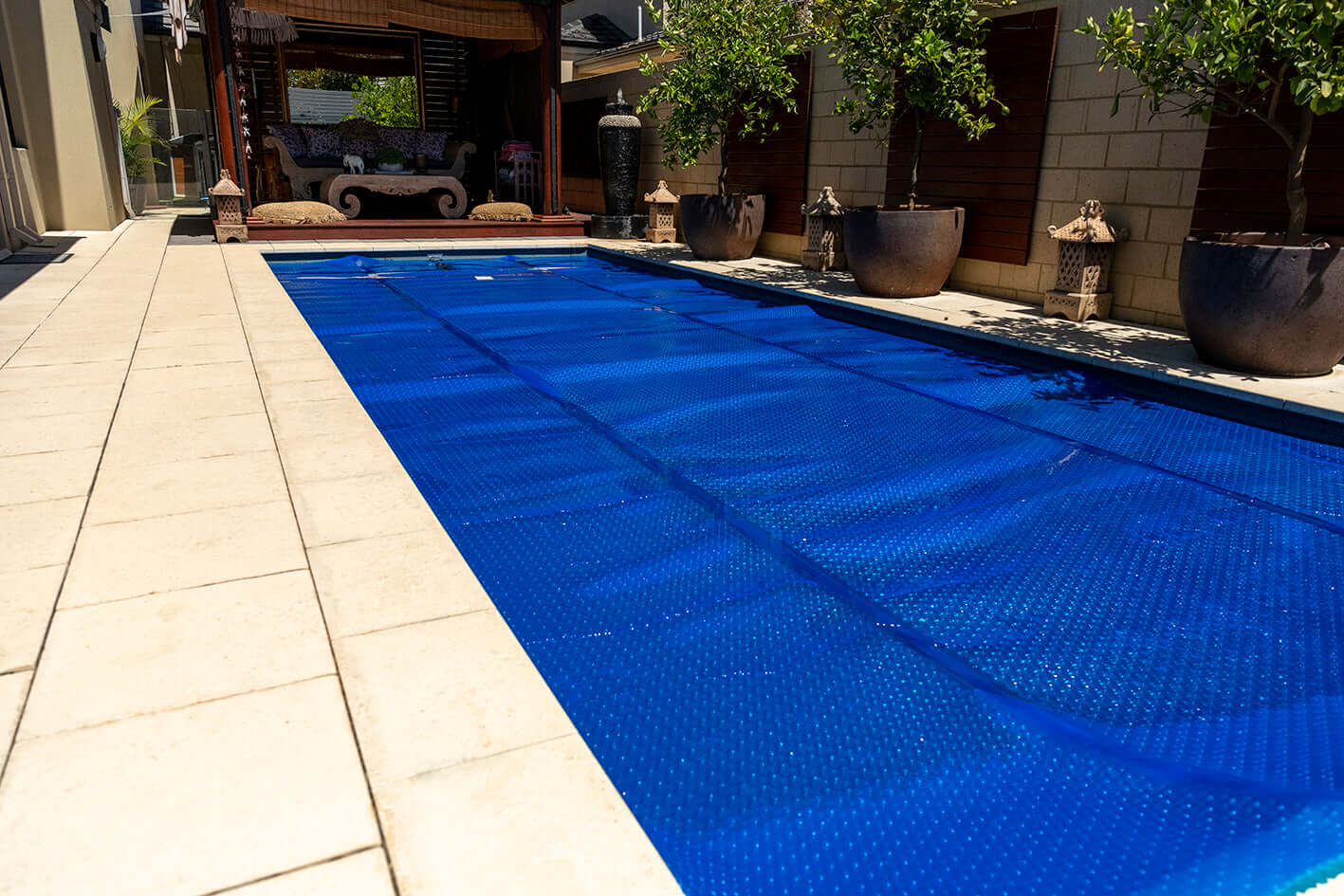
Most pool and spa owners assume a cover is a cover. Buy something that fits the surface, roll it out when the water isn't in use, done. That assumption is exactly why so many covers end up replaced within a season or two, or worse, why a spa is left without the safety barrier it actually needs.
A pool and a spa are not the same body of water, and the covers built for them are engineered around entirely different problems. A pool cover has to manage a large surface area, moderate heat, and constant sun exposure. A spa cover has to lock in a small volume of water at 38 to 40°C, resist waterlogging, and often double as a child safety barrier under Australian pool fencing law. Put the wrong one on the wrong water feature and you lose heat, lose money, or lose the safety compliance you thought you had.
This guide breaks down exactly how pool covers and spa covers differ in construction, insulation, safety, cost and lifespan, then shows you which type of cover suits a pool, a spa, or a swim spa sitting in between the two.
Here's What You Need to Know in Under a Minute
- Pool covers use flexible solar, thermal or mesh sheeting; spa covers are rigid bi-fold foam wrapped in marine-grade vinyl
- Pools cycle between roughly 22°C and 30°C; spas sit constantly at 36°C to 40°C, needing a much thicker insulating cover
- Up to 90% of a pool's heat loss happens through the water surface, which is exactly what a cover is designed to block
- A quality solar pool cover can lift water temperature by up to 8°C at zero running cost
- Spa covers are typically four to five inches thick to hold water 10°C or more above standard pool temperature
- A standard pool cover is not a fencing substitute; a lockable spa cover may qualify as a barrier in some states
- A basic pool cover starts from around $100; a quality custom spa cover typically runs $200 to $600 or more
7 Key Differences Between Pool Covers and Spa Covers
Before the detail, here's the comparison stripped back to its essentials.
- Construction — Pool covers use flexible solar, thermal or mesh sheeting; spa covers are rigid bi-fold foam wrapped in marine-grade vinyl.
- Insulation Job — A pool cover manages passive solar gain and evaporation across a large surface; a spa cover holds heat that's already there against a much bigger temperature gap.
- Thickness — Pool covers run fractions of a millimetre thick; spa covers are typically four to five inches of tapered foam.
- Water Temperature Range — Pools cycle between roughly 22°C and 30°C; spas sit constantly at 36°C to 40°C.
- Security Function — A standard pool cover isn't rated as a safety barrier; a lockable spa cover can, in some states, count toward fencing compliance.
- Cost Per Square Metre — Spa covers cost more to manufacture per square metre, but the smaller surface usually means a lower total spend than a full pool cover.
- How They Fail — Pool covers degrade from UV exposure and tearing; spa covers fail when the vinyl skin lets moisture into the foam core.
The rest of this guide unpacks each of these in detail, starting with why the two are built so differently in the first place.
Why Pool Covers and Spa Covers Are Built Differently
A pool cover is designed to be handled every day, across a surface that can run to 40 or 50 square metres or more. That means it needs to be light enough to roll, flexible enough to fold onto a roller, and durable enough to withstand years of direct Australian sun. The most common constructions are solar sheeting with a bubble layer, thermal foam laminated between polyethylene layers, and mesh for debris control. All three are designed around one requirement: cover a large area, then get out of the way quickly when someone wants to swim.
A spa cover solves the opposite problem. The surface area is small, often under six square metres, but the water sits at a far higher temperature and stays there around the clock. Spa covers are almost universally rigid bi-fold hardcovers, a dense foam core wrapped in marine-grade vinyl, hinged in the middle so two people can lift and fold it back in one motion. Where a pool cover trades thickness for coverage, a spa cover trades coverage for insulation density.
The practical result is that a pool cover stretched over a spa won't hold the heat a spa needs, and a spa cover cut down to fit a pool would be too heavy, too expensive per square metre, and unnecessary for a surface that isn't sitting at 40°C.
How Insulation Requirements Differ Between Pools and Spas
Heat loss is the single biggest driver of running costs for both a pool and a spa, but the scale of the problem is different. Up to 90% of a pool's heat loss happens through the water surface, which is why a pool cover is the highest-leverage investment most owners can make before reaching for a heater. A quality solar pool cover transmits solar energy through the cover during the day, lifting water temperature by up to 8°C with no running cost, then slows evaporation overnight to hold that gain.
Thermal pool covers go a step further for owners running a heater, since their job is retention rather than solar gain: preventing heat that's already in the water from escaping through the surface overnight.
A spa cover has to do something more demanding again. Spa water typically sits between 36°C and 40°C around the clock, well above the 22°C to 30°C range a pool cycles through. To hold that heat differential, spa covers are built four to five inches thick with a tapered profile, dense enough that the insulation value doesn't collapse under its own weight. A standard pool cover at a fraction of that thickness simply isn't built to hold a 15°C to 18°C gap between water and ambient air indefinitely.
Is a Pool Cover or a Spa Cover Safer?
Security is where the two categories diverge most sharply, and it's the difference most owners get wrong.
Spa covers are almost always fitted with heavy-duty, lockable straps, specifically to stop children or pets accessing hot water when the spa isn't supervised. That's a meaningful safety feature, but it isn't automatically a legal substitute for fencing. Under Australia's pool safety barrier standard, fences must be at least 1.2 metres high with no gap exceeding 100mm, and the rules around whether a lockable spa cover can replace a fence vary by state. Some jurisdictions accept a securely fastened, child-resistant lid as an alternative barrier for above-ground spas; others require a fence regardless of the cover fitted.
⚠️
Confirm With Your Council First
New South Wales, for example, confirms that some spa pools may use a securely fastened, child-resistant structure such as a lid, grille or mesh to prevent access when the spa isn't in use, but notes this exemption depends on the size and function of the spa, and larger swim spas may still require a fence. Always check your local council and state requirements before relying on a cover in place of a barrier.
Standard pool covers, by contrast, are not designed or rated as safety devices at all. A solar or thermal blanket sitting on the water surface does not provide the structural support to stop a child or pet from breaking through, and pool fencing remains mandatory regardless of what cover is fitted. If child safety around the pool is the priority, that's a separate conversation from insulation and evaporation control, and one worth having with a qualified pool safety installer.
What Does a Pool Cover Cost vs a Spa Cover in Australia?
Cost comparisons between pool covers and spa covers only make sense once you account for the difference in surface area.
A basic solar blanket for a pool can start from around $100, scaling up through thermal covers and mesh options into the low thousands depending on size and micron rating. A fully automated slat cover system, which handles the rolling and unrolling mechanically, sits at the premium end and can run into several thousand dollars installed, reflecting both the surface area covered and the drive mechanism.
A custom-fitted spa cover typically costs somewhere between $200 and $600 or more, depending on foam thickness, vinyl grade and any custom shaping required. On a per-square-metre basis that's a far higher price than most pool covers, because the foam core and vinyl construction needed to hold spa-level heat is more expensive to manufacture than flexible pool sheeting. The upside is that because a spa's surface area is so much smaller, the total outlay is usually lower than a full pool cover, even though the unit cost per square metre runs higher.
Our full breakdown of pool cover costs in Australia covers pricing across every cover type in more detail, including what drives the difference between entry-level and premium options.
How Long Do Pool Covers and Spa Covers Last?
Both cover types face the same enemies eventually, water and sun, but they fail in different ways.
Pool covers are exposed to constant UV, and the most common failure mode is the material shrinking, curling or tearing after prolonged sun exposure, particularly if the cover is left exposed on the roller rather than protected. Leaf litter and debris also accelerate wear if a cover isn't kept clear. With proper handling, a quality pool cover can be expected to perform for several years before replacement, and how you protect your pool cover day to day makes a measurable difference to that lifespan.
Spa covers fail differently. Because they sit directly on hot water around the clock, the most common issue is the vinyl skin developing small tears that let moisture into the foam core. Once that happens, the cover absorbs water, becomes progressively heavier, and loses insulation value as the internal vapour barrier breaks down. A spa cover in this state won't show obvious damage from the outside, but it will cost noticeably more to run and will eventually need replacing well before a comparable pool cover would.
Pool Covers vs Spa Covers at a Glance
Pulling every attribute into one place makes the decision easier to hold in your head at once.
| Attribute |
Pool Cover |
Spa Cover |
Best Suited To |
| Construction |
Flexible solar, thermal or mesh sheeting |
Rigid bi-fold foam core in marine-grade vinyl |
Matches the surface area and handling method needed |
| Typical Thickness |
Fractions of a millimetre to a few millimetres |
4 to 5 inches, tapered |
Reflects the insulation load each has to carry |
| Water Temperature |
22°C to 30°C |
36°C to 40°C |
Sized to the heat differential being managed |
| Security Role |
Not a fencing substitute |
Lockable, conditionally accepted as a barrier in some states |
Always confirm with your local council |
| Cost (Australia) |
~$100 to several thousand, scaled to surface area |
~$200 to $600+, scaled to foam grade |
Compare on a per-square-metre basis, not sticker price |
| Failure Mode |
UV tearing, shrinking, debris wear |
Waterlogging, vapour barrier failure |
Both are reduced with consistent daily use |
What About Swim Spas? The Cover That Sits Between the Two
Swim spas sit in a genuine grey area. They're too large for a standard bi-fold spa lid to be practical, since a rigid hardcover on a swim spa can stretch to four metres or more and becomes genuinely difficult for one or two people to lift manually every single day. At the same time, a flimsy solar or thermal pool blanket doesn't have the rigidity to hold the heat a swim spa's heat pump is working to maintain, and won't provide any of the security benefit a hardcover offers.
This is exactly why the market has moved toward mechanised solutions for swim spas, systems that combine a rigid, insulated panel with a motorised or geared mechanism so the cover can be deployed and retracted without manual lifting. The economics matter here too: a cover that's awkward to move gets left off, and every night it's left off is a night of heat loss the heat pump has to make up the following morning.
Elite's automated pool covers were purpose-built to solve exactly this problem for larger water surfaces, including swim spas and inground pools alike. A rigid aluminium slat system deployed at the push of a button removes the physical effort entirely, which means the cover actually gets used every night rather than three nights out of seven.
What Type of Cover Do You Actually Need?
Once you know which category your water feature falls into, matching it to the right product is straightforward.
- Standard in-ground or above-ground pool, general recreational use: a solar or thermal blanket on a pool cover roller covers most households well, balancing solar heat gain against ease of daily use.
- Pool with heavy leaf or debris exposure: a mesh cover prioritises keeping the water clean over solar heating.
- Large pool, commercial facility, or a pool where manual handling is impractical: an automated rigid slat system removes the labour entirely and gets used consistently.
- Standard hot tub or bolt-on spa: a purpose-built spa cover sized and shaped to the spa, with lockable straps for basic security.
- Swim spa or large in-ground spa: an automated rigid cover system, for the same reasons it suits larger pools; manageable daily use plus real insulation value.
If you're still unsure which category fits your setup, our guide to how to buy and fit a pool cover and roller walks through measuring, sizing and roller selection in more depth.
Why Choose Elite Pool Covers for Your Pool or Spa Cover
Elite Pool Covers has been designing and manufacturing pool cover systems in Perth, Western Australia since 1989. Elite was the first Australian company to design, develop and manufacture an automatic pool cover, and the first to manufacture all-aluminium commercial rollers, mobile domestic rollers and an inground hideaway roller system. These aren't marketing claims; they're documented industry firsts that other manufacturers have since replicated.
That track record extends well beyond residential backyards. Elite was chosen from a list of international companies to cover the pools at two World Swimming Championships held at Challenge Stadium in Western Australia, and has since supplied large commercial installations at HBF Stadium, Fiona Stanley Hospital and Perth Children's Hospital. Elite's full range of pool cover rollers is engineered from that same commercial-grade standard, built to handle daily use without the wear that shortens the life of lighter-duty products.
Elite is a member of SPASA Australia, the peak industry body for the pool and spa industry, and exports its range to New Zealand, South Africa, Spain, France and the United Arab Emirates. Whether the requirement is a solar blanket for a suburban pool or a fully automated system for a commercial swim spa, the same manufacturing standard applies across the range.
Frequently Asked Questions
Can I use a pool cover on my spa?
Not effectively. A standard pool cover isn't built to withstand sustained water temperatures of 36°C to 40°C, and doesn't have the thickness or tapered profile to hold that heat differential. It also won't provide the lockable security feature a purpose-built spa cover offers. A spa needs a dedicated foam-core hardcover sized to its specific dimensions.
Do spa covers stop evaporation like pool covers?
Yes, in principle both cover types work the same way, sealing the water surface to slow evaporation and retain heat. In practice, a well-fitted spa cover is often more effective at stopping evaporation than a pool cover, simply because the smaller surface area and tighter, rigid fit leave less opportunity for gaps or airflow underneath.
Is a spa cover considered a safety barrier in Australia?
It depends on your state and the size of the spa. Some jurisdictions, including New South Wales, allow a securely fastened, child-resistant lid to substitute for fencing on smaller above-ground spas, but this is conditional and doesn't apply universally. Other states require standard pool fencing regardless of the cover fitted. Always confirm the current rules with your local council before relying on a cover as your only safety barrier.
How much does a pool cover cost compared to a spa cover?
A basic pool cover can start from around $100 and scale into the thousands for automated systems, while a quality custom spa cover typically runs from $200 to $600 or more. Spa covers cost more per square metre due to their thicker foam and vinyl construction, but because a spa's surface area is much smaller than a pool's, the total spend is usually lower.
Choosing the Right Cover for Your Water
Pool covers and spa covers solve related but genuinely different problems. A pool cover manages a large surface area against solar heat and evaporation, built to be handled daily without excessive weight or cost. A spa cover holds a small volume of water at a much higher, constant temperature, and often carries a security function pool covers don't. Getting this distinction right before you buy means you're not paying for insulation you don't need, or worse, relying on a cover that was never designed to keep water in, heat in, or a child out.
Swim spas sit at the intersection of the two, and that's exactly where an automated rigid cover earns its cost: real insulation value combined with the ease of use that means it actually gets deployed every night.
Get an Elite Pool Covers Quote Today
Whether you're covering a pool, a spa, or a swim spa, get the setup that's actually built for your water. Elite Pool Covers are Australian leaders in swimming pool covers and roller technology. Call us on (08) 9240 2262 or request a personalised quote for pricing tailored to your pool.